Featured

Upwards and Onwards…

The school year is halfway done and I have taught more than 100 days of in person school. I never thought this would be an achievement. But amidst the uncertainty of the pandemic, every little success is worth celebrating.

Today, I am also celebrating my decision to be the Assistant Department Head for our math department. This position for me is an exploration into the kind of leader I want to be. Do I want to be a department head, a dean, a principal, a math coach, teach other teachers or none of the above?

With the support of my department head, I have gone into classrooms to improve my coaching skills, I have mentored new teachers, and most importantly, they have made me a part of the decision-making process about the future vision and pathway for our department and school.

One such opportunity presented itself a few days ago, when my department head wanted my take about a problem they noticed, what they are doing about it and how I would approach it.

Our school, and our department, has been moving towards more and more multi-level classrooms to promote equity, ease of movement and more student-centered learning. In the process, we are noticing that some students were being left behind, they were not performing well in classes and on state exams and consequentially, some of them were disengaging and dropping out of school. My department head decided to investigate the cause for this. They reached out to Special Education department and, together, the two departments reached out to the middle schools feeding into our high school.

Throughout this investigation, they figured out that some of our freshmen students, despite our best efforts, were not being supported in the best possible way and we had no way of identifying them till it was too late. They gathered data from the past few years and after a thorough analysis of the problem, they approached the principal. The principal not only agreed with them but also pointed out that this seems to be a systemic problem which needs a policy-based solution on the district level. He set up a meeting with all the stakeholders where my department head would be presenting this problem and then they would work towards finding a solution.

This is where I come in. My department head shared their work so far with me and wanted my analysis and feedback on the next steps. I pointed out some key details they could add into the presentation, like the history of multi-level in our department. I also asked questions which I thought their audience might have. Most importantly, I helped them focus on the big picture. To me, this seemed like a district level problem which would need a district level solution. I pointed out to them that they should have a solution in their back pocket (in case someone asks) but helped them see that the solution should not be a school-based solution. I was confident that the solution they propose should be a district level solution involving people from all grade levels as administrators from all grade level were at this meeting.

I also pointed out that they should keep in mind what they want to get out of this meeting. I understand that the objective is to present the problem, but I suggested that they should also think about how to guide the conversation to get to a solution. It is very easy to lose track of the objective when multiple people are involved. Finally, I recommended keeping the conversation away from nitty gritty details of curriculum and focus on the big picture impact of the problem they had uncovered.

I hope my feedback and suggestions were useful to them but this whole conversation was extremely useful for me as well. I got an insight into their process of analyzing a problem and working towards a solution. I also understood how and when to reach out to the administration, what information I should have with me before I reach out to them and how to best present my argument. It was an insight into the workings of our school at the highest level.

This experience, and many more like these, are strengthening my resolve to keep improving my leadership skills so that I can make meaningful contribution towards making our school and community more equitable for all students.

Featured

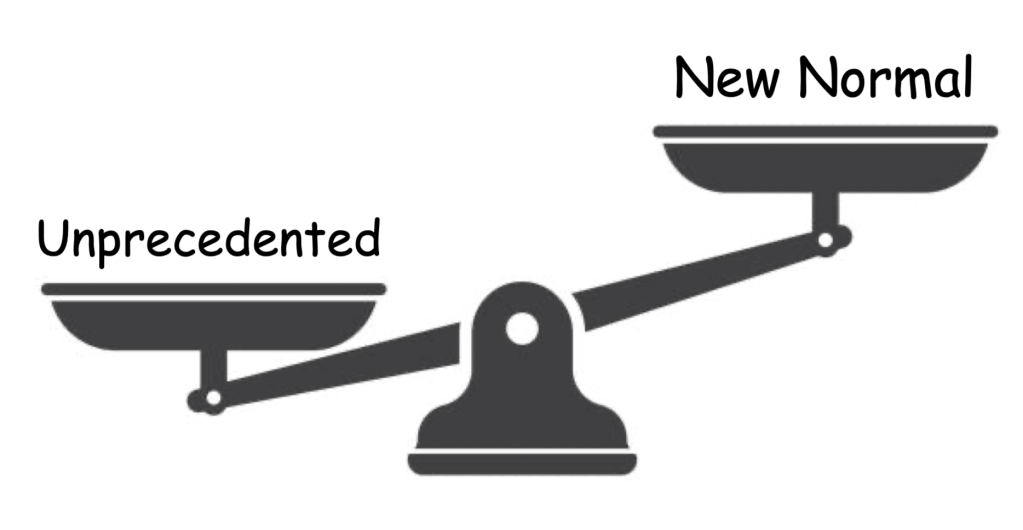
Unprecedented v/s New Normal

I have probably heard ‘new normal’ in the last 3 months as many times as I have heard ‘unprecedented’ in the last 13, and it is scary.


The world went through an unprecedented time in the last 1 year and forced all of us to change the way we interact with people, do our jobs, do grocery shopping, protect ourselves; basically survive. We realized the importance of societal responsibility and mental health, the prevalence of racial injustice and economic disparity and our vulnerability as human beings.

Today, at least in the United States, we have enough vaccines that we can once again hug our grandparents, hang out with our friends and plan for having all students back in our classes.After almost a year, we transitioned from thinking about surviving an unprecedented pandemic to figuring out our new normal. But, are we really going back to new normal or just reverting to old normal?

Can we take a moment to reflect on everything we did last year and see what we would like to take with us to the new normal?

I can start…
I hated teaching on zoom but I love the chat feature. It gives me an opportunity to check in with students individually without anyone knowing.

I don’t think I can teach without desmos anymore!

I missed seeing kids in person but I know some students thrived in online learning because they did not have to worry about pressures of physically being in school, they were much more comfortable in their own space.

I am devastated by all the racial hate around us but I am proud of the way students showed leadership about educating themselves and people around them, by organizing peaceful and safe protests and demanding concrete actions from our leaders.


Last year we had to slow down, take a breathe and figure out what our priorities are. I prioritized relationships over content, rigor over volume, conversations over independent work, mastery over speed and I think I want to continue doing that next year too. But this is not possible if my new normal has to include everything from the old normal too. Something has to give.


To all the leaders out there, every time you say new normal and have certain expectations/suggestions for the new normal, don’t forget to clarify what we are replacing, otherwise it is very easy to revert to the old ways and  forget that we saw racial injustice and achievement gap and inequity in every possible way around us, and then the world really would be crumbling in more ways than we can count.

Teaching AI: Burying Our Heads in the Sand is Not an Option

A few weeks ago, I walked into my AP Computer Science Principles class and did something that felt a little risky: I handed the conversation over to my students.

Not entirely, of course. I had designed the lesson. I had curated the resources. But the question I put in front of them…

 “What policies and practices would make AI beneficial for our learning in this class?”

… that one I genuinely did not know the answer to. And I wanted to find out what they thought.

What followed was one of the most energizing class periods I have had in a long time.

We ran a jigsaw discussion. Students were assigned to one of four groups and asked to read articles and gather key findings.

  1. Student Reality
  2. Learning Signs and Risks
  3. Practical Implementation
  4. Optimistic Vision

Then they reshuffled into new groups to share their findings across perspectives and draft a recommended AI policy together. Finally, we came together as a whole class to build a common set of agreements.

Click here to view the lesson and resources used

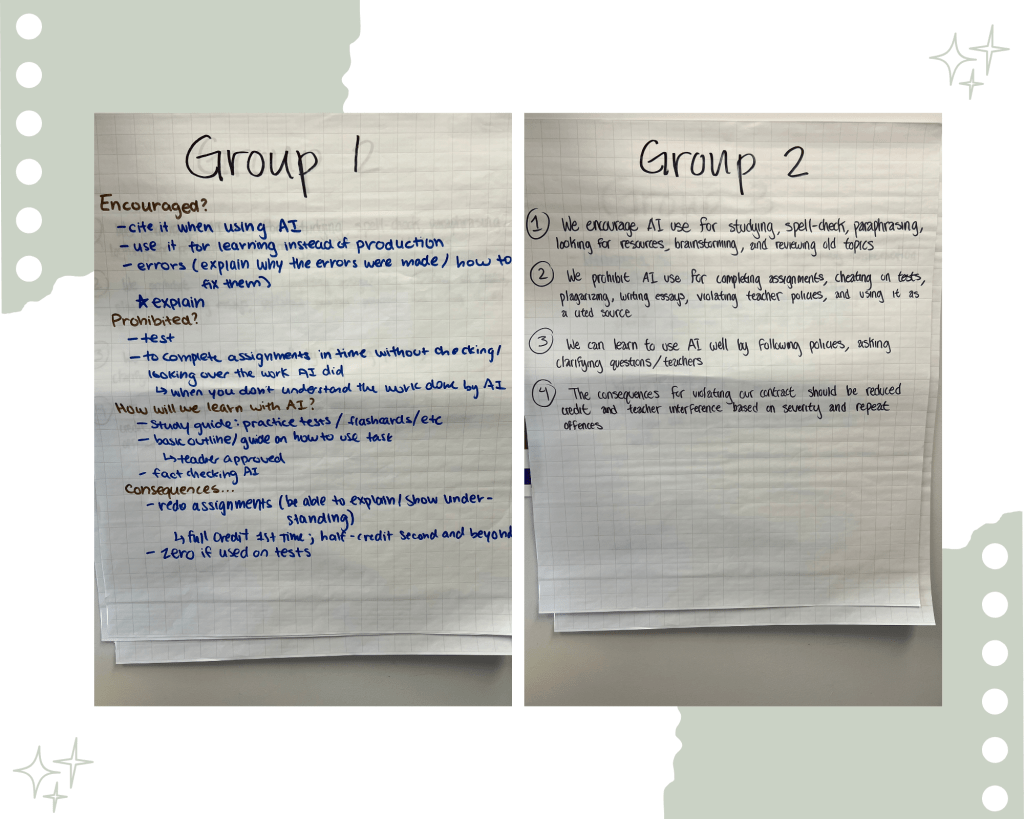
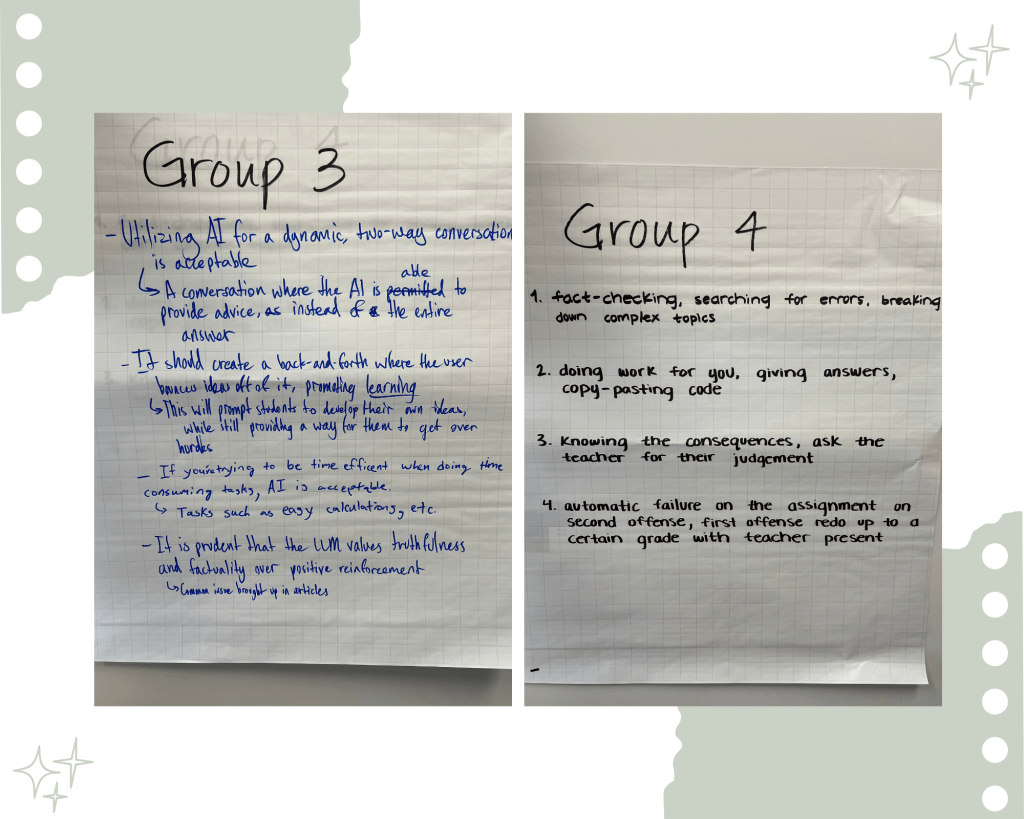
By the end of the period, my students had produced something I was genuinely proud of. They had determined, on their own, that AI should be used as a sparring partner, not a butler. That it is encouraged for debugging, brainstorming, studying, and understanding concepts, but prohibited when it replaces the thinking process entirely. They decided that there should be consequences for misuse, that they needed to cite AI the same way they cite a source, and that they should always ask before using it. They didn’t need me to tell them any of this. They figured it out.

That moment told me everything I need to know about where we need to go as educators.

As an educator, I feel we are at a crossroads. I strongly believe AI is here to stay and our students are using it everyday. Now we have the choice to make it the big ugly monster or teach them how to use it ways that enhance their learning.

When calculators entered classrooms, there was significant resistance. Many teachers feared students would stop thinking, stop developing number sense, stop doing the hard cognitive work of arithmetic. And honestly? Some of those fears were not unfounded. There are real downsides. But here is what also happened: students with math learning disabilities gained access to grade-level content that had previously been out of reach (University of Minnesota, Institute on Community Integration — Accommodations Toolkit: Calculator Research). Students could explore more abstract and complex mathematical ideas without getting stuck in tedious computation. We could spend more class time on why a concept works rather than just how to carry it out. Math educators leaned in, adapted, and made it work… because we saw the benefit.

The same story played out with the internet. With Desmos. With graphing calculators. With every piece of technology that educators first feared and then figured out how to use well.

AI is not different. It is just louder.


Here is the reality: students are already using AI. According to a 2025 Pew Research study, the share of U.S. teens using ChatGPT for schoolwork doubled in just one year, from 13% to 26%, with nearly a third of 11th and 12th graders using it regularly. They were using it before we designed a policy. They are using it tonight to help them with homework. The question is never whether they will use it; the question is whether we are going to help them use it well, or leave them to figure it out on their own with no guidance, no ethical framework, and no understanding of its limitations.

Burying our heads in the sand is not neutrality. It is abdication.

As educators, we have a responsibility: not just to teach content, but to prepare students for the world they are actually going to live and work in. And in that world, AI literacy is not optional. Knowing when to use AI, when to trust it, how to verify it, how to cite it, and when to put it down and think for yourself … these are skills. And skills need to be taught.

The lesson I ran with my CSP class was not just about AI. It was about ethical reasoning. About weighing competing perspectives. About building consensus. About learning to disagree productively and still arrive at something meaningful together. These are restorative practices IIRP, 2009). These are thinking classroom skills (peterliljedahl.com). And AI as a topic, as a tool, as a question, gave us the perfect vehicle to practice all of them.

There are real risks. I am not dismissing them. There are students who will use AI to avoid thinking, and that avoidance has real costs for their learning and development. There are equity concerns about access and about who benefits. There is misinformation. There is the very real danger of students confusing fluency with understanding.

But these risks are not reasons to turn away. They are reasons to lean in harder. A 2025 Gallup survey found that only 1 in 5 teachers works at a school with an AI policy, and nearly 70% received no training on AI tools whatsoever. That is not caution. That is a vacuum and students are filling it on their own.

When my students concluded that AI use should always be accompanied by a thought process, that copying and pasting is prohibited, that assessments should remain AI-free, that anything which curtails problem-solving is off-limits, they were doing exactly what we want students to do. They were grappling with a hard question, gathering evidence, and making a principled argument. That is the work of education.

I do not have all the answers about what the right AI policy is. No one does yet. And that is actually the point. We are all figuring this out together… teachers, students, schools, and society at large.

But I know this: the classroom is exactly where this conversation should happen. Not after students have already formed their habits. Not once the technology has moved so far ahead of us that we are just playing catch-up. Now! With our students. In community. With care, with curiosity, and with the belief that they are capable of thinking through hard things, because they are.

They showed me that a few weeks ago.

I hope they keep showing me.

Talking about January 6th

What kind of week it has been…

I am neither the first nor the last person to feel this way. It is difficult for me to put into words the emotional rollercoaster this past week has been.

The week started with the anxiety of teaching from the school building for the first time in 10 months. Then came Wednesday when this roller coaster really picked up speed. In the afternoon, when the news of the riot at the Capitol came out, I was in shock…at a loss of words. I could not process or understand what was happening. All the hate in the videos and pictures being reported was not sinking in.

Next came the feeling of double standards. Would we have reacted the same way if people in front of the Capitol were a different color or have a different religion? Did the law enforcement not remember the way they reacted to Black Lives Matter protests just a few months back? Wasn’t this so much worse?

A few hours later came the understanding of how this riot should not be called a protest…should not be compared to a protest. It was an attempt by an angry mob to inflict harm and spread hatred because they did not like or agree with what the majority wanted.

All of this happened while I was worrying about how to process this with my students the next day…how would my students of color respond? How would I explain to my students that a riot is different from a protest and that this was a riot? Would I be able to find the strength to be vulnerable enough to let them know that I am grieving with them…for the attack is on the democratic values of this country and this country belongs to ALL of us. How could I make sure that we talk about not just the political nature of this attack but also its racial and anti-Semitic ramifications? How could we use this lesson to unite us instead of divide?

When Thursday came,  as always, my students gave me hope…hope in their understanding…hope in their empathy…hope in their willingness to lead…hope in their hope…

We, as a community talked, processed, vented and healed bit by bit.

By the end of the day I was exhausted and emotionally drained, but one thing kept nagging me…

People in front of the Capitol building that day were mostly white(as far as I could see in the news), and most of them must have gone to schools and had some education.Did this mean we, as a society, are failing our children? How is it that with so much focus on diversity and anti racist practices in schools there could be so much hate and segregation? 

This weekend I did some  research into education resources pertaining to teaching students about race and race relations in this country. What I found is disappointing but not surprising. In the past decade we, as educators focussed so much on how to teach students of color that we forgot to talk much about how to teach our white students that they are part of the problem and that they can and should be part of the solution. We have numerous books, videos, articles and classes on how to teach/interact with students of color but what about our white students? How do we explain to them the idea of white privilege without turning them against people of color? 

Understanding our own biases and learning to become an ally is a journey every educator and every person should take, but how do I convince my students that ALL of them need to start on that journey sooner rather than later?

My experience so far…

I am 8 weeks into Remote Teaching this year. I have to admit it has been an adventure…
I have heard many people say this and I have to admit, it feels like the first year of teaching (and since my first year of teaching was not that far back, that is saying something!). 
As daunting as this task seemed a few months ago, I was also kind of excited. I felt like this is the year I can change things, because everything was changing anyway…
The more I thought about planning for this year, the more I reflected on what had not been working for me in the past and how I could change that.
I strongly believe that every student, every person is a math person but I always get a lot of push back about it. Last year I realized I have to convince not just the students that they are mathematicians but also their parents. The other part was to convince my students that math is beautiful and logical and so very useful. This article on abakcus.com helped me find words for my thoughts.


What I figured out was that I need to work on changing mindsets, of students and adults. I had to show them the beauty of math and its usefulness, I had to show each and every one of my students that they are mathematicians and to help them experience what a mathematician does. I had to do all of this while teaching them remotely, getting to know them and hopefully while teaching them the curriculum as well… a daunting task. 


I usually spend the first 3-4 weeks of school on community building. The only difference this time was to translate some of my usual activities online or find new activities which would get at the same thing. My objective for this first month is to get to know the kids, have them get to know each other, build a classroom community of learners and to show them that math can be fun, logical, have multiple paths to the same or different answers…
As usual, I relied heavily on my ever helpful colleagues and the amazing MtBos community. I could not have made it through these crazy times without these pillars of support.
Here is a list of activities I did to help set up my community of learners. Please feel free to suggest, modify or ignore this list:


1. Name tents : This is one my favorite first week activities, It takes a few minutes everyday but I get to learn a lot from the responses my kids give. I adapted the desmos version that Sara VanDerWerf has, changed the prompts to things I wanted the kid to answer and made sure I gave each student some feedback for the next day.


2. Google Calendar birthday invite: I wanted students to get used to using google calendar. To that end, I had all of them send me an invite to an event on their birthdays. Now, not only do they know how to set up the events but I know all their birthdays

3. Getting to know some Mathematicians: I got this idea from Howie Hua and adapted into google slides where each student upload their picture into a frame which says ‘I am a mathematician’. They not only write about themselves but also comment on each other’s slides, which helps them get to know each other..


4. Quick math conversations: This was a math twist on speed dating (again thanks to Howie Hua). I would highly recommend this activity for anyone trying to get the kids talk in breakout rooms.


5. Ultimate tic tac toe: A highly strategic game in which students can get competitive really quickly. Once they figure out the consequences of their moves, they have to really think about each step.


6. 20 words/phrases: In this activity, I asked students to list words/phrases which come to their mind when they think of a math class. Then we striked out and replaced the words/phrases we did not want associated with our classroom. This showed me not only what their experience had been but also what they are most worried about. This is another gem I adapted from Howie Hua.

Alongside these basic activities, I added in some logical math problems from my WarmUp folder. I have not collected them over the years from other teachers, different websites, brilliant.org, etc.
My students work on these problems individually but then we share all the different strategies they used to come up with answers. I do not tell them the right answer till everyone has had a chance to share their strategy. I believe this helps them see that it is ok to make mistakes and explaining their thinking helps them learn.

All of these little things, little activities, feedback loops and moments of connections are now paying dividends. Most of my students now look forward to sharing their strategies with their peers. They are not afraid to admit or point out a mistake respectfully, most importantly, they like to explore math for exploration sake. 
Very recently, while reviewing rules of exponents, we came to zero exponent rule. One of the students asked me why is that true. I used the ‘catch and release’ technique and posed the question back to the class. Very soon, the entire class was involved in a discussion about it. In 20 min, they were able to prove the rule and I could not have been prouder.
These small moments of victories are what keeps me going and makes me smile. I hope all the educators out there gets to experience the same joy!

BELIEF…

Happy Father’s Day!


A few weeks ago, a student came to my office hours (distance learning!) and asked me for help with a problem. She told me she is stuck and doesn’t know what to do. I asked her to try the problem right then. Miraculously, she solved the problem. She said, “Ms. K, I should just do all the problems sitting in front of you. You don’t even say anything but somehow I am able to do the problems when you are there!”

Her statement took me back to my childhood. I used to often joke with my Dad that I should just carry his picture to all my tests because I can always solve the problem when he is around. He never used to tell me how to fix my mistake or what the mistake even was, the most guidance he would give me was to point me to the part of the problem; beginning, middle or end; and even that was rare. He would just sit there and watch me flail….and miraculously I learnt to swim. 

Thank you Dad…

What he gave me was so much more important that instruction or motivation. He gave me BELIEF….My father, with no background in teaching or education, was the definition of a Warm Demander. He, through his action and his words, taught me to believe in myself and my ability. He also instilled in me this unwavering belief that he will be my Champion if I need someone to push me and my Cushion who I can always fall back on.

That is the kind of teacher I aspire to be…but how? What can I do to make sure ALL my students BELIEVE…In this world where they are told everyday not to believe…not to believe in themselves…in the society…in the news…how do I show them that I believe in them and their abilities? That they should believe in themselves?

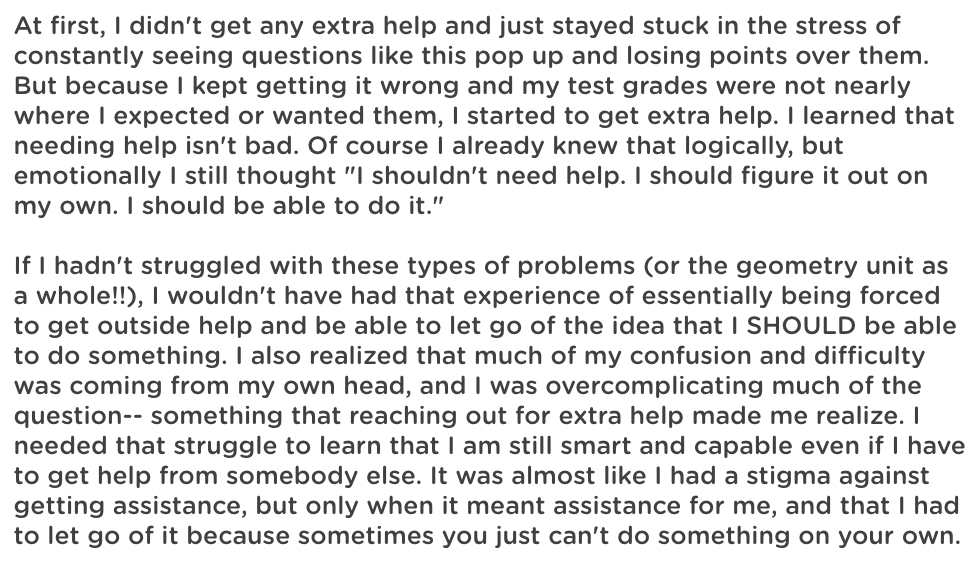
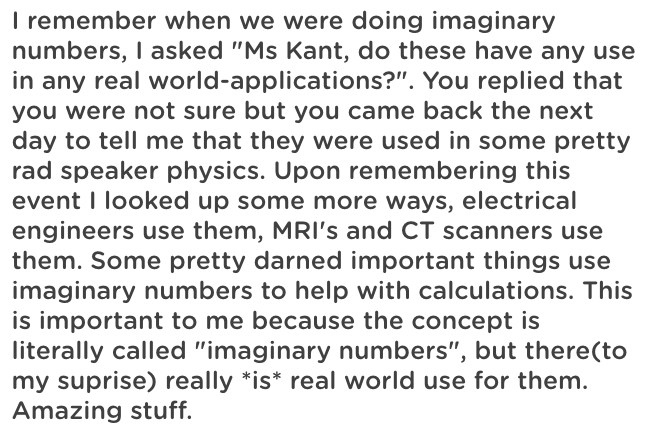
Instead of a final exam, I asked my students to reflect on their learning this year. Francis Su inspired me to focus the reflection on the virtues that math can instill in us. My students reflected on their perseverance, curiosity, thinking for oneself, creativity and their idea of beauty. Here are some of their responses:

PERSEVERANCE

CURIOSITY

THINKING FOR ONESELF

CREATIVITY

BEAUTY

___________________________________________________________________

These reflections showed me just how much my kids have grown over this past year…how much they have learned and how ready they are for the future.

As the school year is ending, I think, it is time for me to reflect as well. Reflect on what worked this year, what did not. Was I able to instill belief in some of my students, who did my strategies work for and why? I don’t have answer to all these questions…yet…but I will keep looking and experimenting.

For now, I would like to wish all Fathers and Father-like-figures,  a very Happy, Peaceful and Joyous Father’s Day. You are more important to us than we let on! Keep believing in us so that we can believe in us!

Looking Forward…

As I sit in my makeshift office, instead of jumping around in my classroom, trying to plan activities which can engage my students from afar, I can’t help but think about how my students are dealing with this isolation and fear. I am sitting in front of my computer trying to come up with a list of objectives and time and again I keep coming back to critical thinking and problem solving instead of algebra and geometry as objectives for my lessons.
Everywhere on the internet I see people talking about the growth of the COVID-19 virus and how to turn it into a lesson or activity and all I can think of is the need for out of the box thinkers and problem solvers in this world. That is not to say that understanding the growth pattern is not important but I believe it is perhaps more imporatant to analyze what we could have done as humans to help the situation, what we can do now.
That is what I want to teach my students. That is the lesson I would like us to take from these unprecedented times. This is the time for us to be creative, to be courageous, to collaborate, to find peace and beauty in things we usually would not…
I can not think of a better medium than mathematics to do just that. I am taking this time to prepare, for whenever I see my students, to teach with a focus on life skills. I am taking this time to solidify my resolve of not getting bogged down by the need for tests and quizzes, but create assessments which teach my students the life skills I want them to leave school with, be it partner tasks or project based assessments, or designing a solution for a real world problem. I am taking this time to teach via exploration, to focus on inquiry more than the procedure. 
If you can think of any activity, lesson, assessment idea which I can use for my high school students, I am all ears. Please reach out. We are in this together. I would be happy to brainstorm ideas.

What do you think of mathematics?

Is it easy for you or hard? Do you think it is important and why? Is it procedural or creative? Is it logical or intuitive? Is it abstract or concrete? Is it something you want to learn or something you have to learn? These are the questions I wanted answered when I asked my students to do fill in this free write using the essay “A mathematician’s Lament” by Paul Lockart.

What I received was an insight into their thinking…how they perceived math and math education. Everyone agreed math is important to learn but most of my students said we have to learn because that is what society (colleges, parents, peers) deems important. They did not see how it related to real life or whether it could ever relate to something they would care about. As an engineer and a math teacher, that was heartbreaking for me. 

Now it was my duty to show them the wonders of math and its connection to their lives. Everything from game development to art projects to collecting and analyzing data about the community, it was my duty to show them the mathematics I love. I have strived to do just that this past year.

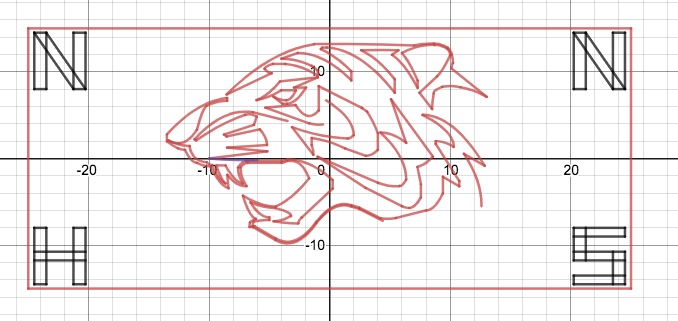
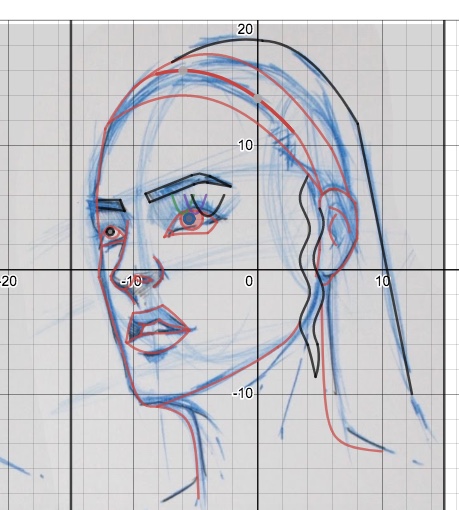
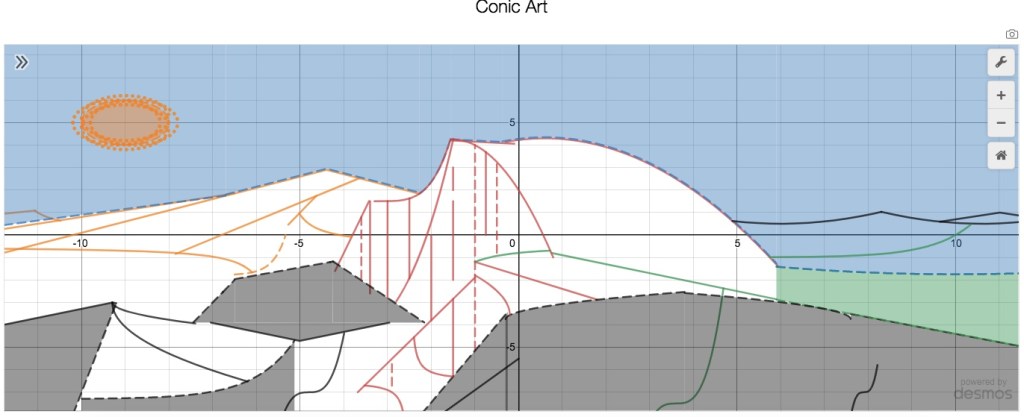
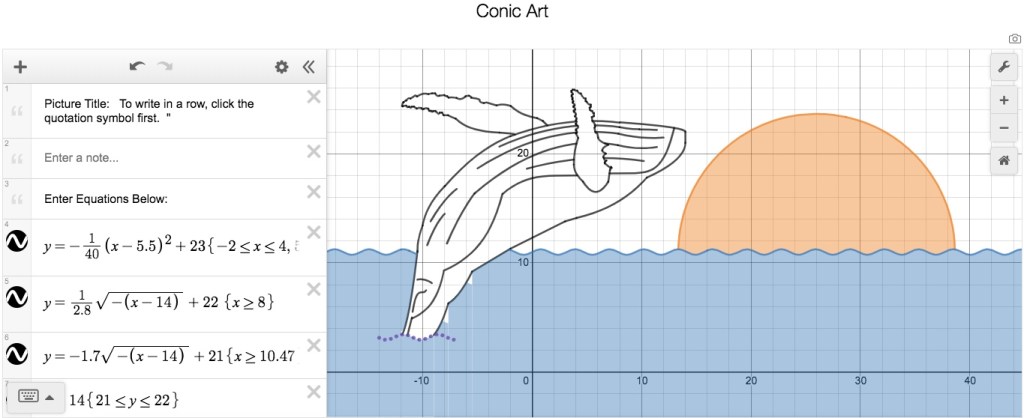
Lately, my students have been working on art project using demos. We are learning about functions and they are exploring different functions and their domains and ranges to show their creativity. This is an opportunity for them to tell me what they are passionate about and why.I have one student making a scaled working model of the solar system because he wants to be a astronaut and another drawing a beautiful whale because that is her favorite animal in the world (after cats :)). One student is tracing one of her actual sketches using functions…I knew she was artistic but I did not know she drew such beautiful sketches. 

This project is reaffirming my belief in project based learning…not only because these kinds of projects gives me a chance to learn more about my students but also because they are a more realistic form of assessments. Life in the real world is rarely about taking a test but often about applying everything you learned to different situations

I would be doing the same free write with my students at the end of the school year…so that I can see how much we have all grown and learned

Are application problems the only way to make math engaging?

Every time I say to a group of math teachers that I want to make math more engaging in my classroom…inevitably the first suggestion has been to incorporate more real world applications. Great idea but what about the content areas which don’t have grade appropriate application problems…like complex numbers.

Complex numbers or imaginary numbers are taught in sophomore year but I am yet to find an application problem…engineering? Not everyone finds it interesting…

This year I decided I am on a mission… I will find a way to make imaginary numbers interesting and engaging. 

I started the lesson by asking the students about the need for  natural numbers and why as humans we started using them. The students went on an exploration of invention/discovery of numbers, specially zero. Then we talked about the advancement of the human race and our evolving needs.
There came a point when we had all the numbers we needed but humans started applying those numbers  in geometrical shapes and constructing buildings. That is when we felt the need for irrational numbers. On the other side of the world, Al-Khwarizmi was writing the Kitab al-Jabr to teach the world about algebra. 
I had the most insightful conversation with my students about this. We discussed need of math for survival and need of math for exploration and discovery. That is when I introduced the concept of imaginary numbers as a way for humans to explore equations which do not have real solutions. 
This was the first time not even one student asked me why we learn this…their reflection at the end of the lesson was positive, showed engagement and understanding. Most importantly, this lesson marked an important milestone in our learning community as a turning point for the need and importance of mathematics. 
This is not to say that connecting content to real world application based problems is not the way to make it engaging, but I think when we focus ONLY on that, we miss out on the beauty of mathematics, its logic, its patterns, its creativity and exploration.

New Year…resolutions…?HOPES!!!

As the year is coming to an end, I have been thinking about steps I am going to take to improve my teaching practices, to help all my students and to grow myself as an individual. Being a classroom teacher does not leave me with a lot of time and energy to think…I am hoping this will help me keep my priorities at the forefront of my mind…even when that’s the last place I look for them!Here is THE list!

1. Be Courageous: I will try not to be afraid of trying new things, of being open to more ideas. I will seize every opportunity I can, to get out of my comfort zone…whether that is trying a new teaching technique or talking about that technique in front of an audience.

2. Listen More, Speak Less: I will listen to my students more. Everything they say matter to me and I will make sure I give them every opportunity to express themselves…in class and outside. I will try to plan lessons which are more student centered and gives them the agency to inquire and explore. Instead of being a sage on the stage, I will be a guide on the side.

3. Homework: I will be more cognizant of what I am assigning as homework and why. I will try to get away from repetitive worksheets and focus on problems which form connections and are more open ended. Mathematical Mindsets (Jo Boaler) has made me take another look at ‘Practice makes perfect’  system I grew up with.

4. Assessments: I will revamp assessments of at least 5 units I teach. I want students to be able to show me their understanding and not just regurgitate the procedural knowledge. I worked on 2 units this year (Exponents and Probability), hope to work on a few more next year.

5.Leveling: I am not saying I will fix leveling in 2020, but I will work on it. This year I have struggled with its affects and causes, pros and cons. Next year, I will focus on what I can do about it…research, talk to decision makers, talk to teachers…I am open to all ideas.

Lastly, I will be KIND…to others and to myself. I will practice self care and I will take on only what I can manage. Easier said than done, when I have just agreed to teach a whole new course next year…

Design a site like this with WordPress.com
Get started